
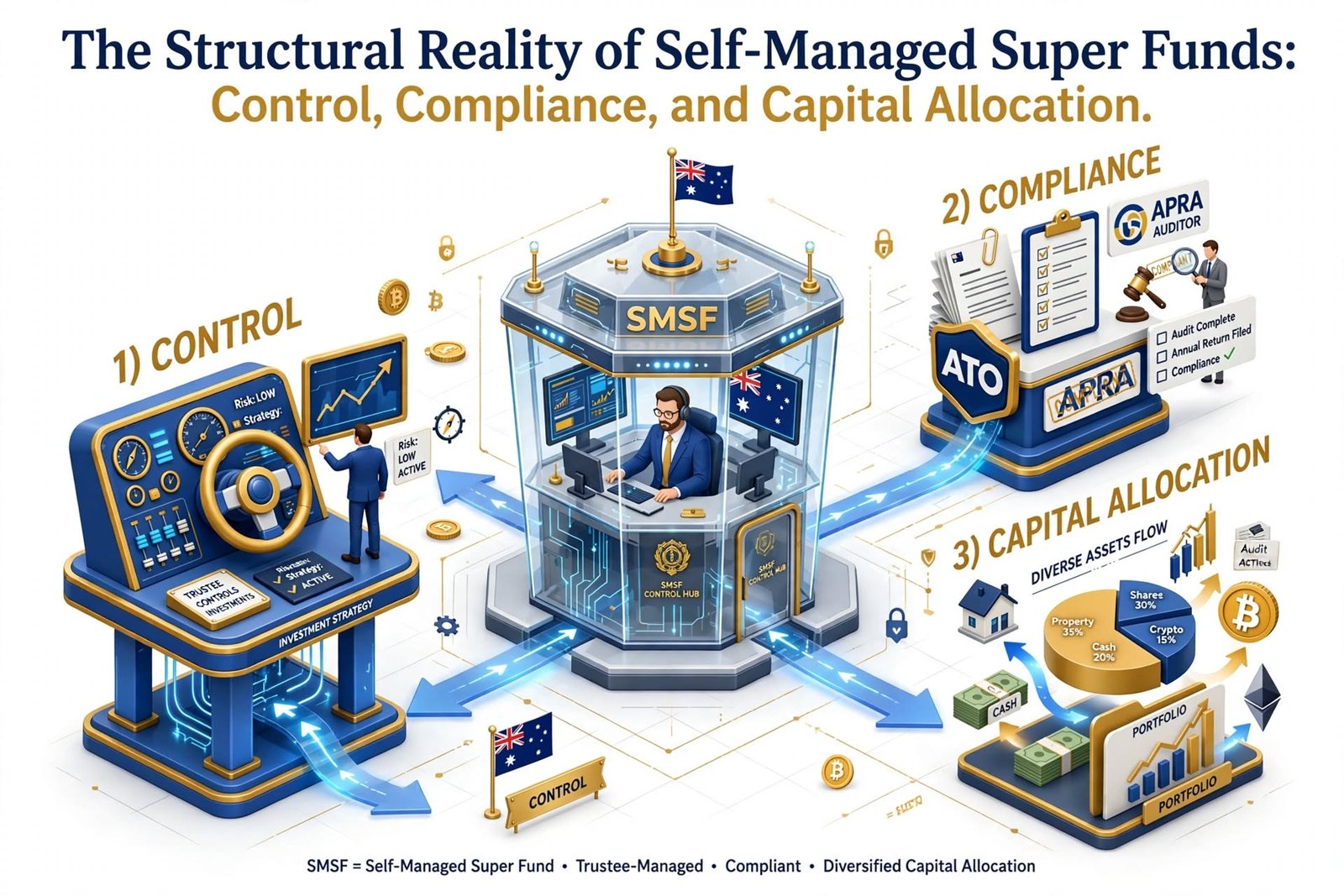
A Self-Managed Super Fund (SMSF) represents the ultimate shift from passive retirement saving to active, self-directed wealth management. Unlike retail or industry superannuation funds
A Self-Managed Super Fund (SMSF) represents the ultimate shift from passive retirement saving to active, self-directed wealth management. Unlike retail or industry superannuation funds governed by large institutional boards, an SMSF places the member directly in the seat of the trustee. This structure is highly appealing for market participants seeking granular control over their asset allocation, specialized tax strategies, and broader investment flexibility.
However, operating an SMSF carries profound fiduciary and legal responsibilities. Trustees are held directly accountable by the Australian Taxation Office (ATO) for navigating complex regulatory frameworks. It is a structure designed for those willing to manage strict compliance obligations, as strategic errors or administrative oversights can result in severe financial penalties and the erosion of retirement capital.
The Architecture of Establishment: Setting Up Correctly
Establishing an SMSF requires precise legal and administrative structuring to ensure it remains a compliant entity under Australian superannuation law. The foundational steps include:
- Trustee Structure Selection: Funds must choose between an individual trustee structure or a corporate trustee structure. The corporate model is often favoured by professionals for its limited liability and streamlined asset ownership transition, though it carries different reporting implications.
- Trust Deed Execution: This is the primary legal document governing the fund. It dictates operational parameters, allowable investments, and internal regulations, and must be drafted to meet current legislative standards.
- Asset Segregation & Registration: All acquired assets must be strictly registered in the name of the SMSF, maintaining a definitive legal separation from the members' personal assets.
- Regulatory Registration & Infrastructure: The fund must be formally registered with the ATO, establish a dedicated bank account for all cash flows, and secure an Electronic Service Address (ESA) to manage employer SG contributions and reporting data.
- Australian Residency Compliance: To retain vital tax concessions, the SMSF must meet the definition of an Australian Superannuation Fund. Members relocating overseas can inadvertently trigger severe non-compliance penalties.
- Mandated Investment Strategy: Trustees are legally required to formulate, document, and regularly review a comprehensive investment strategy that aligns with the risk profile, liquidity needs, and retirement objectives of all members.
- Strategic Exit Planning: A robust framework must be established to dictate how the fund will be unwound in the event of a member’s death, incapacitation, or decision to exit the structure.
Capital Allocation Boundaries & Regulatory Risks
While SMSFs unlock access to a wider array of asset classes—including direct property, unlisted equities, and specialized managed funds—every capital deployment must strictly adhere to the Sole Purpose Test.
This foundational legal doctrine mandates that the fund is maintained for the absolute and sole purpose of providing retirement benefits to its members. Utilizing SMSF capital for immediate personal benefit, acquiring personal-use assets (like holiday homes for personal use), or attempting to access preserved capital early are severe breaches of the Superannuation Industry (Supervision) Act.
Furthermore, the SMSF sector is occasionally targeted by sophisticated compliance schemes. Trustees must remain vigilant against promoters offering 'guaranteed' high returns or strategies proposing early access to locked superannuation capital. Engaging in these illegal schemes inevitably leads to trustee disqualification and substantial financial loss.
Strategic Takeaway
An SMSF is a powerful retirement vehicle, offering unparalleled control over long-term capital allocation. However, this autonomy is intrinsically linked to strict regulatory accountability. Successfully managing an SMSF requires a commitment to ongoing financial education, rigorous compliance tracking, and, typically, the integration of independent structural and legal advice before execution.