
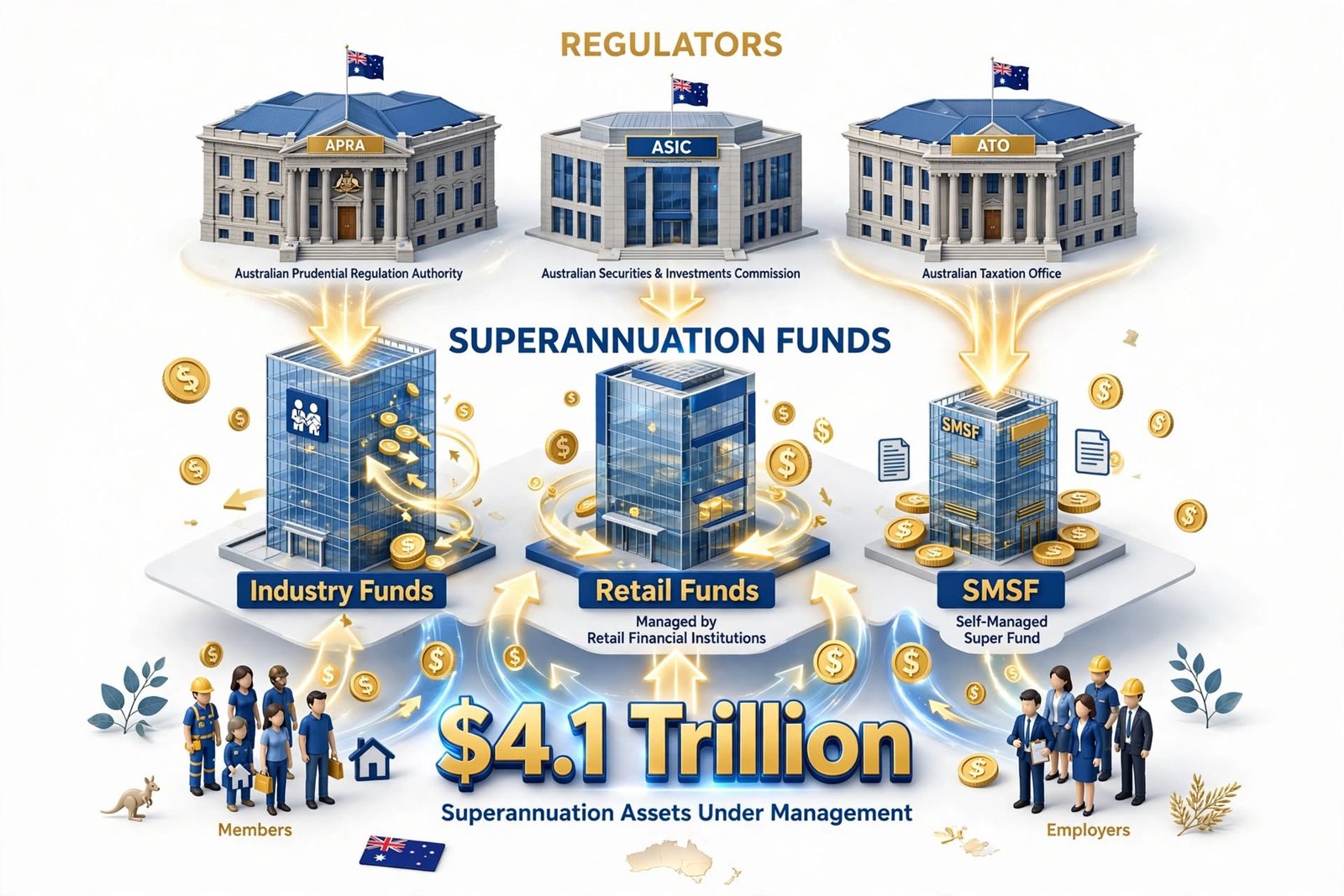
Australia’s superannuation system, formalized in 1992, has evolved into one of the most significant pillars of the domestic economy. According to early 2025 data from the Australian Taxation Office (ATO), the total value of the nation's superannuation assets sits
Australia’s superannuation system, formalized in 1992, has evolved into one of the most significant pillars of the domestic economy. According to early 2025 data from the Australian Taxation Office (ATO), the total value of the nation's superannuation assets sits at approximately AUD 4.1 trillion. To put this immense scale into perspective, it eclipses the estimated AUD 3.3 trillion total market capitalization of the Australian Securities Exchange (ASX).
This vast capital pool not only underpins the retirement architecture for millions of Australians but also acts as a primary liquidity engine for domestic equities, property, and infrastructure. Understanding the structural mechanics of this system is essential for optimizing long-term wealth accumulation.
The Mechanics of Capital Accumulation
At the core of the system is the Superannuation Guarantee (SG), a mandatory employer contribution recently increased to a baseline of 12% of an employee’s ordinary time earnings.
- Fund Selection & Default Protocols: Individuals maintain the flexibility to direct their capital into a preferred retail fund, industry fund, or self-managed super fund (SMSF). In the absence of an active choice, capital defaults into highly regulated, diversified "MySuper" products.
- Institutional Asset Allocation: Superannuation funds deploy capital across a sophisticated matrix of asset classes. This typically includes domestic and international equities, fixed interest, and unlisted commercial property, designed to drive compounding growth over a multi-decade investment horizon.
- Compliance & Tracking: Employers are legislatively mandated to remit SG contributions at least on a quarterly basis. Regular monitoring of these institutional flows via payroll reporting is critical, as regulatory penalties for employer non-compliance are severe.
- Capital Preservation: Funds remain strictly locked until an individual reaches their designated preservation age (typically between 55 and 60, depending on their birth year) and meets a formalized condition of release.
Contribution Thresholds and Tax Efficiency
Beyond mandatory SG payments, individuals frequently utilize voluntary contributions to accelerate capital growth and leverage the system's tax concessions. However, the ATO enforces strict regulatory thresholds governing these inflows:
- Concessional (Pre-Tax) Contributions: Capped at AUD 30,000 per financial year. This limit encompasses mandatory employer SG payments, salary sacrifice arrangements, and personal deductible contributions.
- Non-Concessional (After-Tax) Contributions: Capped at AUD 120,000 per financial year. These represent voluntary deposits made from a participant's after-tax income pool.
Exceeding these precise thresholds triggers punitive tax liabilities. Consequently, proactive tracking is essential for anyone injecting surplus capital into their superannuation accounts beyond the employer minimums.
Strategic Retirement Baselines
Determining an optimal superannuation target is a highly individualized metric, heavily influenced by external macroeconomic factors and personal asset holdings. The most significant variable is primary residence ownership; retiring without mortgage liabilities drastically reduces ongoing capital requirements, thereby amplifying the utility and longevity of even a modest superannuation balance.
The structural integrity of Australia’s superannuation framework—bolstered by the 12% SG mandate and tax-advantaged compounding—provides a highly resilient foundation for long-term financial stability. By understanding contribution limits, asset allocation profiles, and overarching regulatory parameters, market participants can strategically align their superannuation strategy with their broader portfolio objectives.